
Tracing Former Owners of a Calhoun County Property
No single database holds Calhoun County's full owner history. The County Clerk advertises modern official records from 1992 to the present, alongside separate historic Kofile deed indexes. Plats and Commissioner's Court records sit in Laserfiche. These routes are distinct systems rather than one continuous scanned book. The table below lays out what each route covers. It also shows where to look when you need an earlier step.
| Source | Years It Covers | Where Held | What It Shows |
|---|---|---|---|
| Self-Service official records | 1992 to present | County Clerk portal | Modern public instruments; image completeness must be checked |
| Kofile deed index | 1845 to 1985 | Linked from County Clerk page | Historic deed references and party names |
| Deed of trust index | 1911 to 1985 | Linked from County Clerk page | Historic mortgage or security filings, not only sales |
| Laserfiche plats | Year run not stated | County Clerk portal | Recorded plat and commission record browsing |
| Probate index | 1846 to 2005 | Kofile link through the Clerk | Estate records that may explain a transfer |
Start in the modern Self-Service portal for the most recent deed on a parcel. Step back to the deed index for older transfers. Then ask the Clerk how to pull the instrument itself. The Clerk publishes no complete online image run. The 1986 to 1991 stretch has no confirmed coverage. Remember that an index entry is only a finding aid. The document itself, not the reference, is what proves who owned the land.
Calhoun County's 1986 to 1991 Gap
The County Clerk's records page advertises modern official records from 1992 forward. It also lists Kofile deed indexes ending in 1985. It says nothing about which index or book covers 1986 through 1991. Nor does it confirm scanned images for every year after the modern portal begins. Treat the gap as unknown rather than empty.
For an instrument from that transition period, give the Clerk the party names and an approximate date. Include the legal description too. Add any book and page clue from the Assessor card. Ask whether the record sits in a separate index, a paper book, or another portal. The office's public page lists no copy fee or counter hours. Confirm both before you travel.
The County Clerk records hub shows the modern and historic routes side by side. That makes it easier to tell the Self-Service, Kofile, and Laserfiche paths apart.
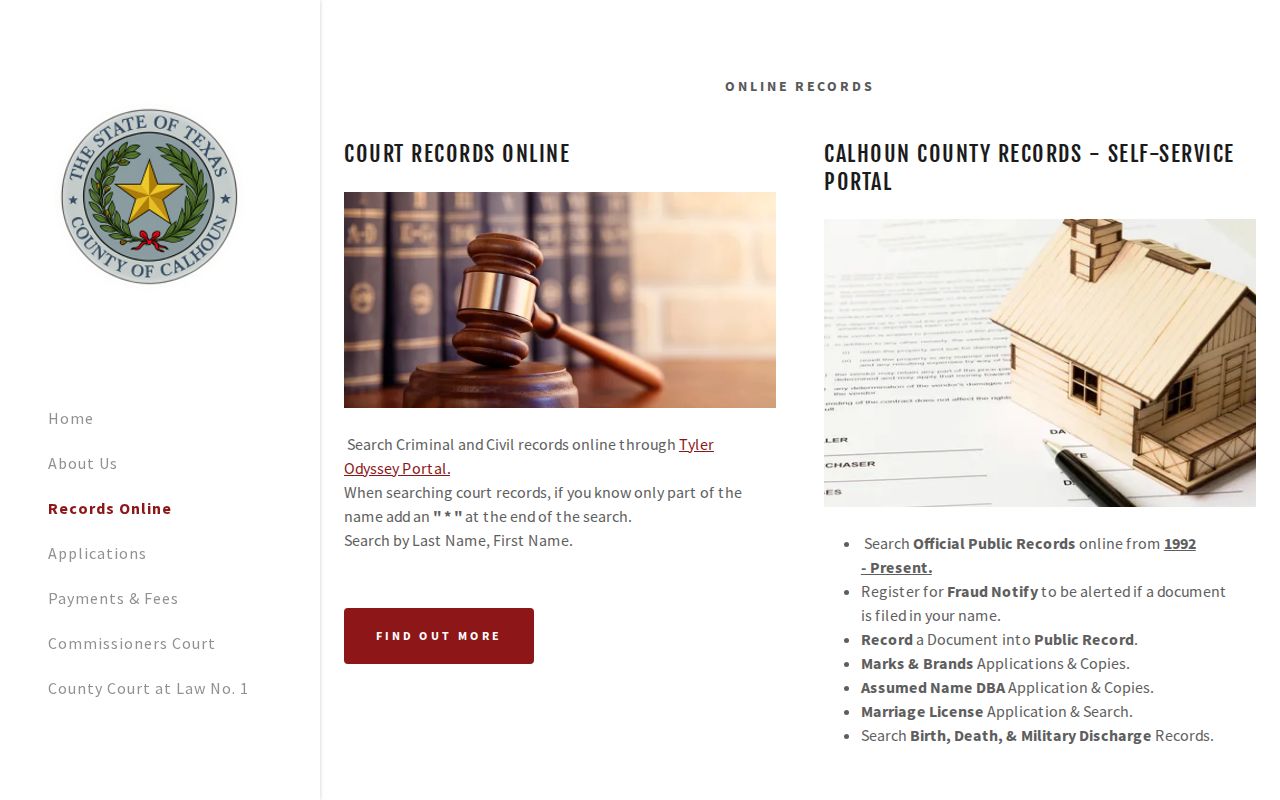
Dates that fall between published index ranges still have a home at the Calhoun County Clerk. Ask the Clerk which deed book covers that period instead of leaving a hole in the ownership chain. The gap is only a routing problem.
Walking the Calhoun County Deed Chain Backward
Start with the newest deed on the land itself. The latest tax roll entry names the current owner of record. But the deed carries the details that matter. Its grantee is your candidate owner, and its grantor signals the transfer just before. Work from that point backward. Search the grantor as a grantee in the earlier date range. Then compare property descriptions deed by deed. Along the way, log every name, role, date, book and page, deed type, and legal description in Calhoun County records. That discipline keeps a correction, mortgage, or partial tract from masquerading as a sale.
- Locate the newest likely deed using the Assessor's deed reference and legal description.
- Write down the grantee, grantor, deed type, recording date, and book/page.
- Search the prior grantor as a grantee, then compare the land description and dates.
- Repeat until the published index ends, then move to older books or the predecessor county.
- Grantor
- The party conveying an interest.
- Grantee
- The party receiving an interest.
- Chain of title
- The sequence of recorded conveyances for the same land.
- Legal description
- The deed text identifying the tract, often more stable than a street address.
Calhoun County Before the County Line
Calhoun County was formed from Gilmer County in 1856. The Clerk's deed index reaches back to 1845, so some entries predate the county itself. When a chain crosses the 1856 line, note which county recorded the deed. Note the recording time as well. Then keep going in Gilmer County property records. No modern Calhoun parcel number appears in the old index. Names and description language have to bridge that transition instead.
Historic entries hide under spelling variations. Search surnames, initials, and reversed name order before concluding an entry is missing. Replatting can also relabel a lot's block or parcel. Carry forward bearings and acreage. Keep stream or ridge calls, adjoining owners, and any road or easement terms. Those details identify the same tract across both counties' deed records.
Calhoun Town Lots and Plat Changes
Grantsville owes its layout to Simon P. Stump, who platted it in 1866. The town became the Calhoun County seat in 1869 and incorporated in 1896. Early downtown deeds often cite a town plat or lot number. They rarely give a street address. For those parcels, the County Clerk offers an Index to Map and Plat Record 1 PDF. It also provides a Laserfiche collection of plats and Commissioner's Court records.
Set the old lot and block beside any later replat or vacation. A newer plat may rename labels or roads. Yet an older deed can still hold an easement, reservation, or dedication. The GIS viewer helps you locate the area. It cannot replace the recorded plat or settle the legal line.
Probate Links in Past Ownership
An unbroken grantor-to-grantee chain sometimes stops cold because an owner died. The County Clerk's historic probate index covers 1846 to 2005. It is the place to turn. A will, an estate appointment, an heir notice, or a sale authorization can explain a later deed. So can an executor or administrator's signature on it. Pull the probate file first. Then match the fiduciary deed or court order to the property description.
State vital records may pin down a death date. But eligibility rules for certified copies appear in W.Va. Code §16-5-28. Remember that a death certificate is not a conveyance. To show how land actually passed to an heir or purchaser, you need the recorded deed. The probate order or the court order works too. Marriage and divorce records sit with separate custodians. Divorce orders are held by the Circuit Clerk.
Library Help for Calhoun Owners
A family name in a property index is only a starting point. The Calhoun County Library and the Historical and Genealogical Society offer an offline route. It helps when the trail goes cold. Their shared collection covers census material. It also holds county and community histories, cemetery records, family genealogies, school yearbooks, church histories, photographs, and vital records. The collection includes microfilm. The genealogy room traces its roots to a 1930s Grantsville women's-club collection. It now sits in the Mill Street building. That building opened in 1968.
The library history page describes the collection and where to find it. Ask staff about exact years and availability before making the trip.
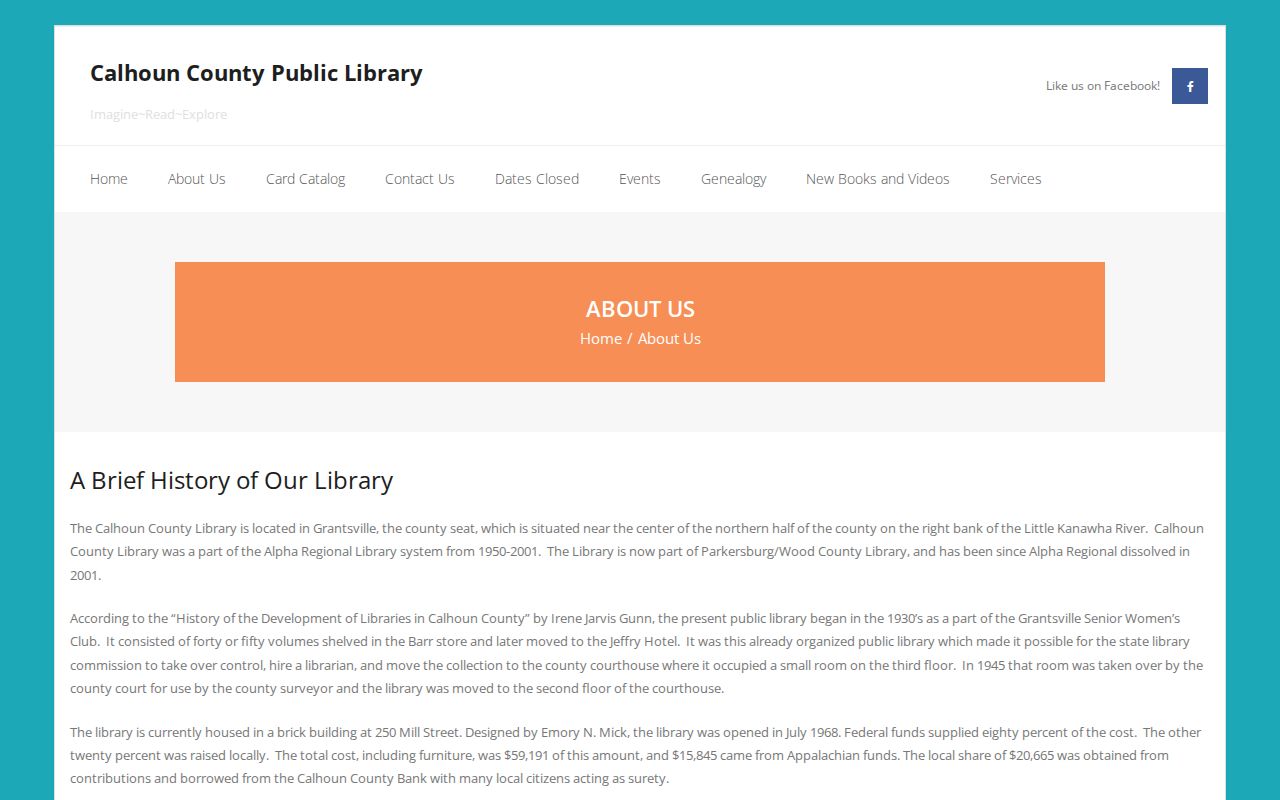
Treat family and cemetery material as clues. Confirm each land transfer in a deed or probate record. The Calhoun County Historical and Genealogical Society describes its local-history collections and its History Center in Grantsville. That can help a visitor plan an in-person search. It is not a deed index, so the conveyance itself still comes from the Clerk.
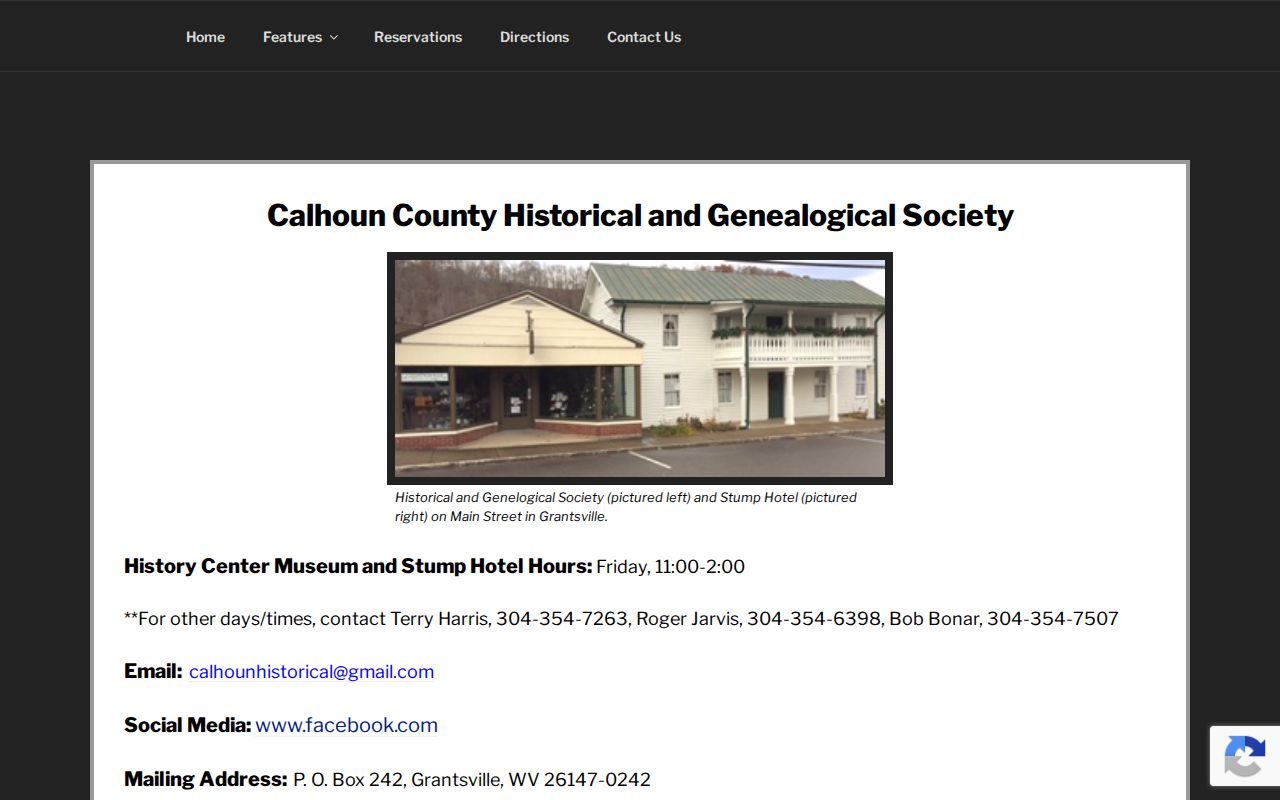
Let the Society material work for you. Names, dates, and places pulled from its files can steer a search through Calhoun County deeds and probate records.
How Far Back Calhoun County Ownership Records Go
Calhoun County's ownership chain does not begin in one online portal. The Clerk's historic index lists deeds from 1845 and deeds of trust from 1911. Modern official records run from 1992 to the present. The 1986 to 1991 handoff between formats is unresolved. No courthouse fire or major records-loss event accounts for it. A gap in the index never means a transfer failed to happen.
The Society's research room at the library holds microfilm. County material there can carry an owner search back through those thin years. The Society was founded in 1974. It keeps a History Center in the former Stump House Hotel in Grantsville. Its collections supply context and leads. The conveyance itself still needs a Clerk instrument, probate record, or court order. Only that stands as proof of who held title.
Lawful use. Use past-owner records for property history, estate research, and title due diligence. Do not use records to track, stalk, harass, threaten, or harm a living person.